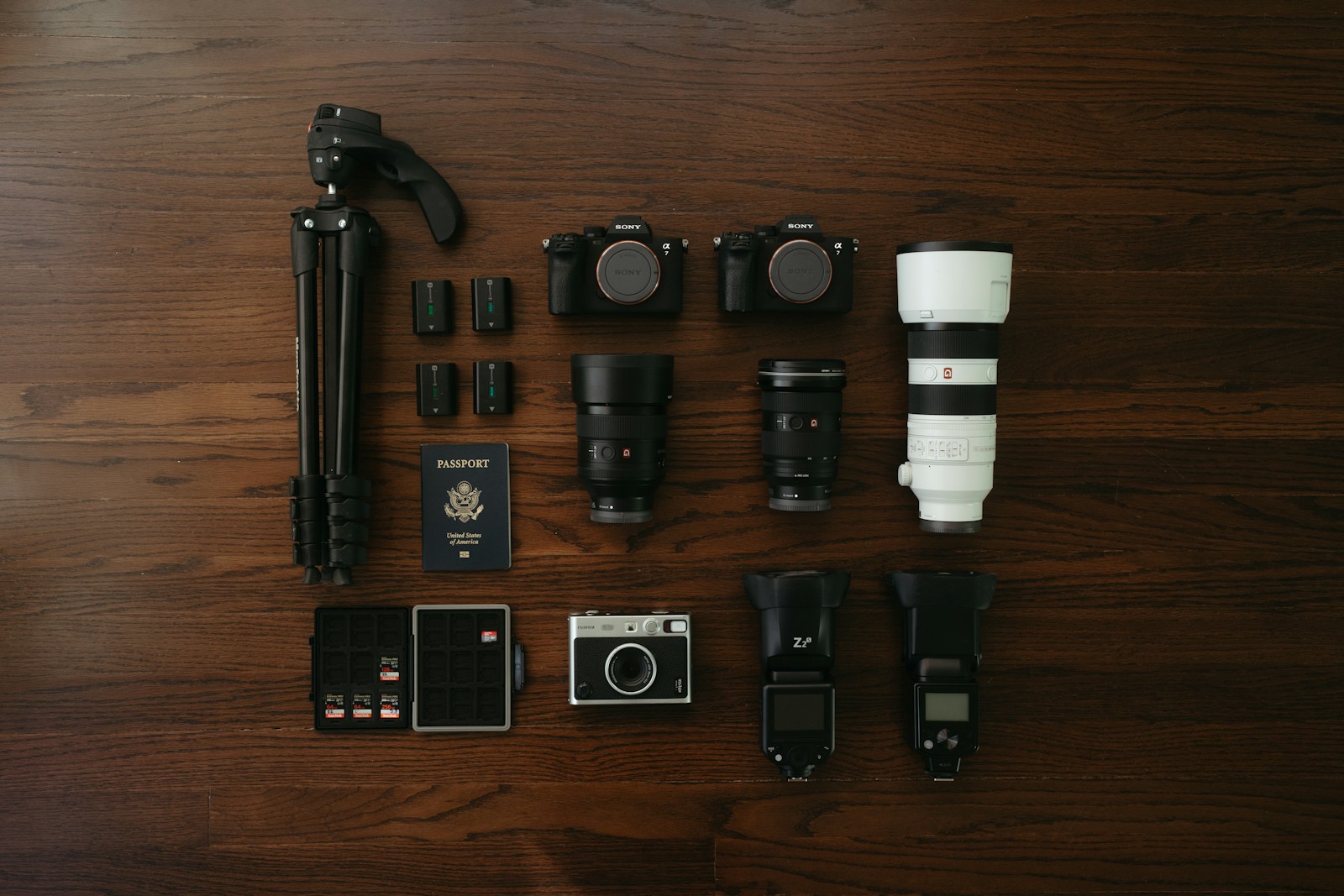
Event photography equipment comes down to five groups: two camera bodies, a few fast lenses, flash, enough power and storage for the whole day, and a way to deliver the photos afterwards. Everything else is backup for the parts that fail.
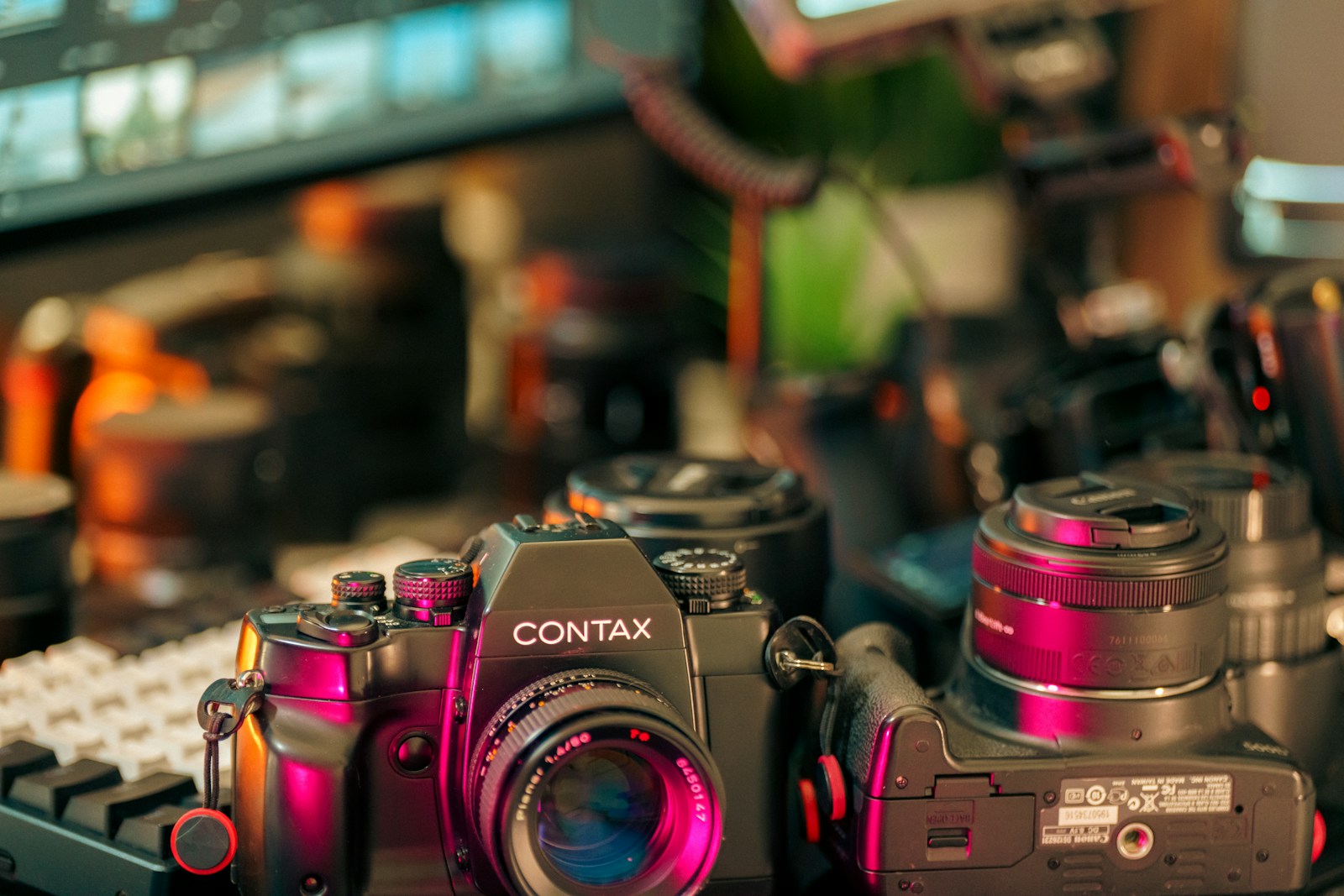
The event photography gear list
The core event kit is two bodies, three or four lenses, two flashes, spare power and cards, and a bag that carries it all through a long day.
Cameras and lenses
- Primary body, full frame, with dual card slots
- Backup body from the same system, so lenses and batteries swap
- 24-70mm f/2.8 zoom
- 70-200mm f/2.8 zoom
- Fast prime, 35mm or 50mm
- 16-35mm wide zoom for venues and big groups
Light
- On-camera flash with a diffuser or bounce card
- Second flash as a backup
- Wireless trigger, light stand and modifier for off-camera light
- Color gels to match the room
Power and storage
- Spare batteries for each body, and their chargers
- Fast memory cards in matched pairs, in a card wallet
- Portable SSD for the same-night backup
- Power strip and a phone power bank
Carry and fix
- Bag or roller case, plus a dual strap or harness
- Rocket blower, lens cloth and rain cover
- Gaffer tape, grey card, printed checklist and the day's timeline
After the event
- A client gallery for delivery (see the last section)
What camera is best for event photography?
The best camera for event photography is a full-frame mirrorless body with dual card slots, dependable eye autofocus and clean files at high ISO. You want two of them.
- Full frame handles dark reception rooms and conference halls with less noise than a smaller sensor at the same settings.
- Eye autofocus on mirrorless bodies tracks a face across a crowded dance floor, which makes wide apertures far less risky than they were on older DSLRs.
- A silent electronic shutter keeps you quiet during vows and speeches. Test it under the venue's lighting first, because some LED and fluorescent lights cause banding.
- Dual card slots can write every frame to both cards, so one failed card does not cost you the event.
Buy the second body from the same system, so a failure costs you a swap, not a reshoot.
Which lenses do event photographers use?
Event photographers mostly work with two fast zooms, a 24-70mm f/2.8 and a 70-200mm f/2.8, plus a fast prime for dark rooms and a wide zoom for the venue.
24-70mm f/2.8: the workhorse
The 24-70mm is the lens that stays on the camera, because it handles groups, candids, tables and the room without a lens change. Its constant f/2.8 aperture holds up when the light drops.
70-200mm f/2.8: reach without getting in the way
The 70-200mm lets you cover the ceremony, the stage and the speeches from the back or the side, without stepping into anyone's view. Its compression also separates people from busy backgrounds.
A fast prime: the low-light lens
A 35mm or 50mm prime at f/1.4 or f/1.8 lets in more light than either zoom, for dark dance floors and portraits with soft backgrounds.
16-35mm: the scene setter
The wide zoom shows the venue, the decor and the size of the crowd. It is also the lens for the big group shot in a tight room.
What lighting do you need for event photography?
You need at least one on-camera flash with a diffuser or bounce card, a second flash as backup, and a wireless trigger if you want light off the camera.
Bounce the flash off a ceiling or wall when you can, so it reads as room light rather than flash. In mixed lighting, a colored gel on the flash matches it to the room and keeps skin tones consistent from shot to shot. An off-camera flash on a stand, behind the dance floor or beside a stage, adds depth that on-camera flash cannot.
How much power and storage should you bring?
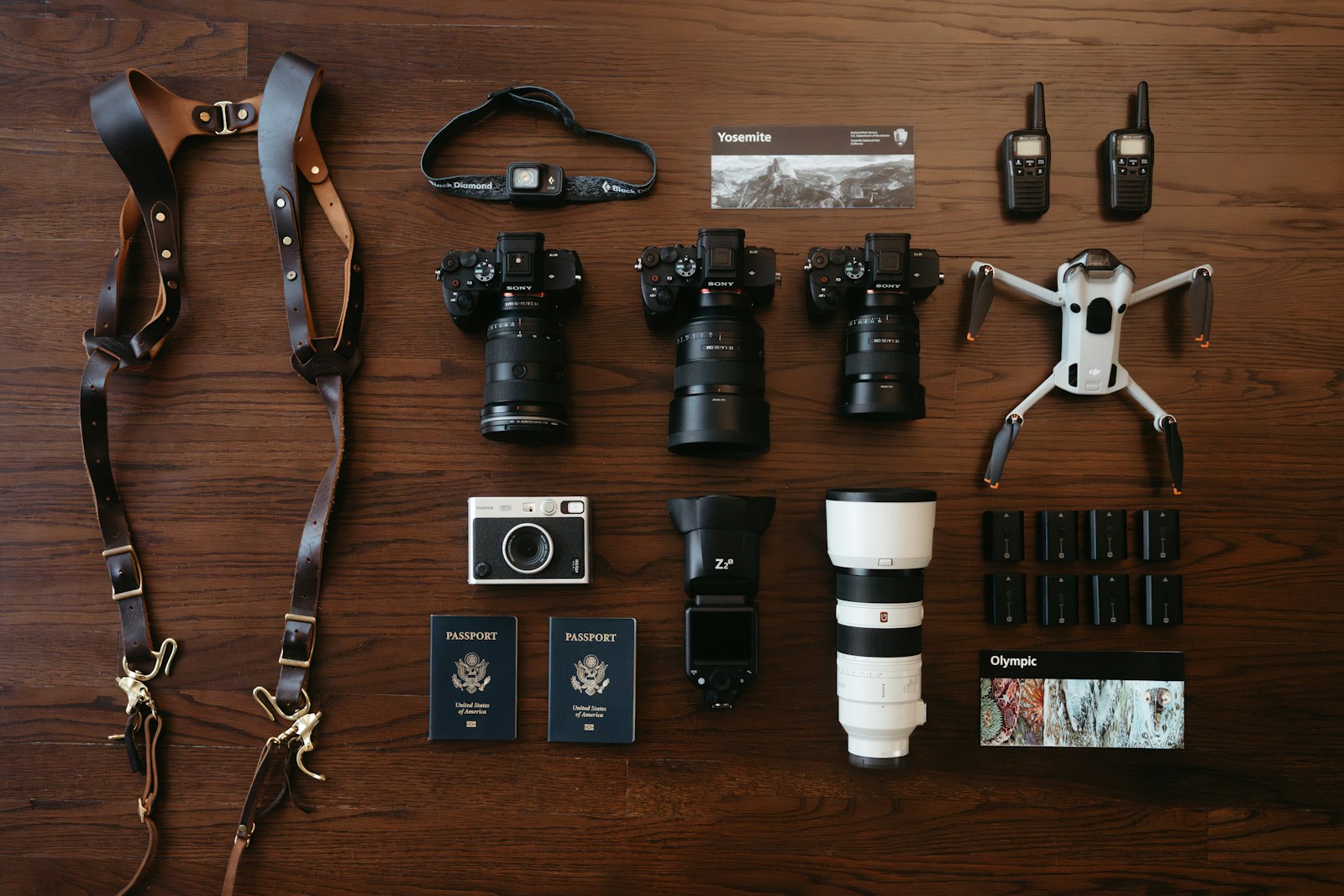
Bring enough batteries and cards to shoot the whole event without recharging, plus a spare set. A busy event rarely gives you a quiet moment to charge.
- Batteries. Use the camera maker's batteries for the main shooting. Keep third-party batteries as backups, since their charge readings can be less reliable.
- Cards. Use fast cards for burst shooting, in matched pairs for the two slots. Several smaller cards spread the risk better than one large one.
- Card wallet. Keep full cards on one side and empty ones on the other, so a used card never gets formatted by mistake.
- Backup. Copy the cards to a portable SSD the same night. Do not format a card until its files exist in two other places.
- Power strip. It turns one free socket into a charging station.
What else goes in the bag?
The small things finish the kit: a strap that carries two bodies, cleaning tools, weather protection, tape and paperwork.
- A dual strap or harness, so you can switch between two lenses without a lens change.
- A rocket blower and lens cloth for every lens change.
- A rain cover for outdoor work.
- Gaffer tape for cables, loose straps and quick fixes.
- A grey card or color checker for rooms with mixed lighting.
- The day's timeline, the contact list and quiet shoes.
When you travel, keep the backup body in a different bag from the main one. A stolen bag should not take both cameras.
If you also shoot video clips
If the client booked short video clips as well, add audio: an on-camera microphone for room sound, and a small lavalier recorder on the officiant or speaker for clear vows and speeches.
If you fly a drone
A drone is optional, and it comes with rules. In the US, flying a small drone for paid work follows the FAA's Part 107 rules, which mean passing the knowledge test for a Remote Pilot Certificate and registering the drone (FAA, Certificated Remote Pilots including Commercial Operators). Ask the venue for permission too.
How do you keep event gear working all day?
Keep gear working by preparing it the day before: charge every battery, format every card in the camera, clean the lenses and sensor, and test each body and flash.
- Check the venue for light, power and access, and the forecast for any outdoor part.
- Pack from the same written checklist every time, and tick it off again when you leave.
How do you build an event kit on a budget?
Build an event kit on a budget by spending first on lenses and a backup body, and saving on the rest. Good lenses stay useful through several camera bodies.
- A previous-generation body still does the job well at events.
- Used gear from a seller with a return window lets you test it before you rely on it.
- Third-party lenses and flashes usually cost less than the camera maker's own.
- Insure the kit, and check that the policy covers professional use and theft away from home.
How do the photos get to the client and the guests?
The photos reach the client through a gallery link you send after the edit, and the guests through the same gallery, by link or QR code. Delivery belongs on the kit list, because it is part of the job the client paid for.
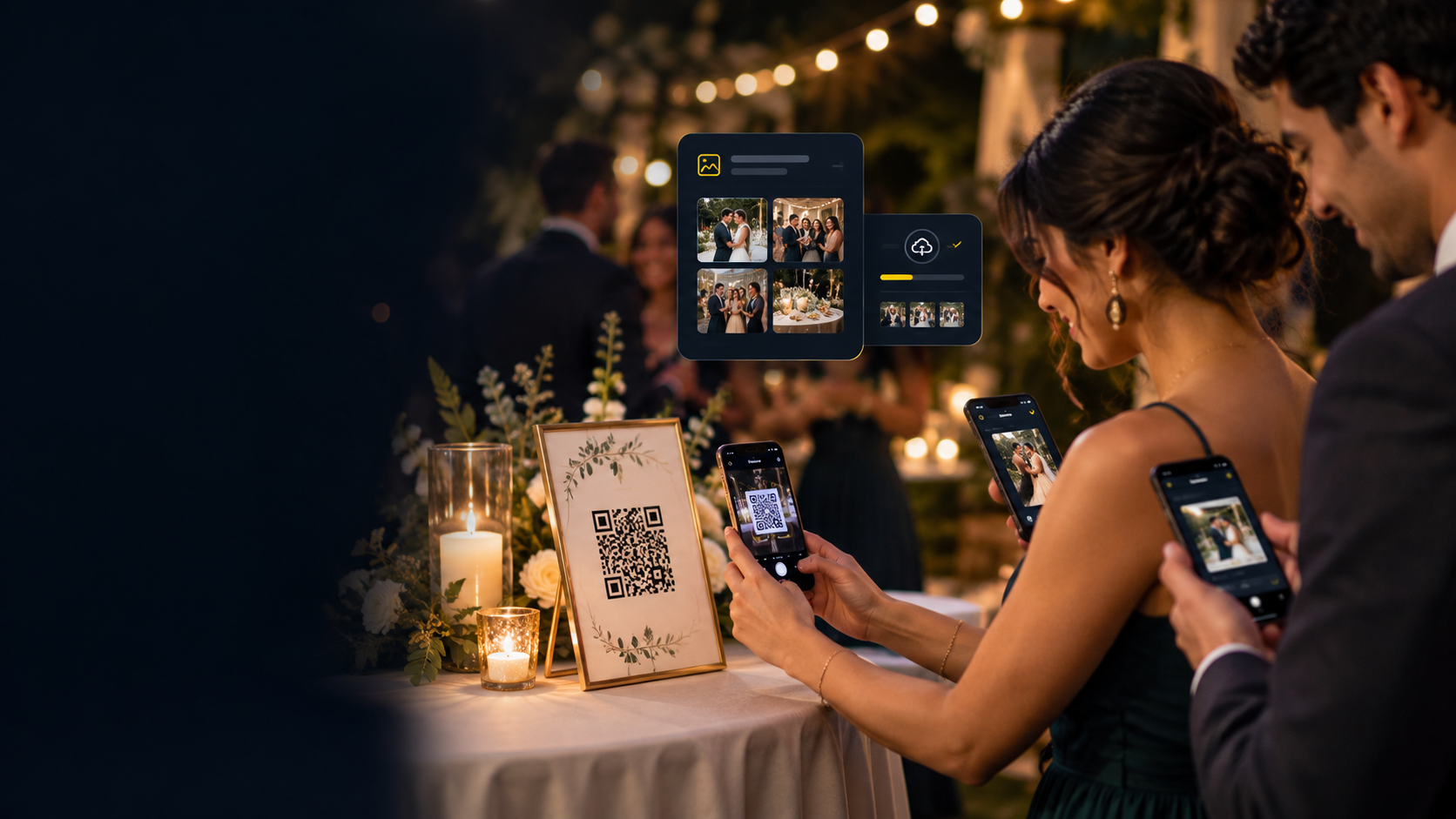
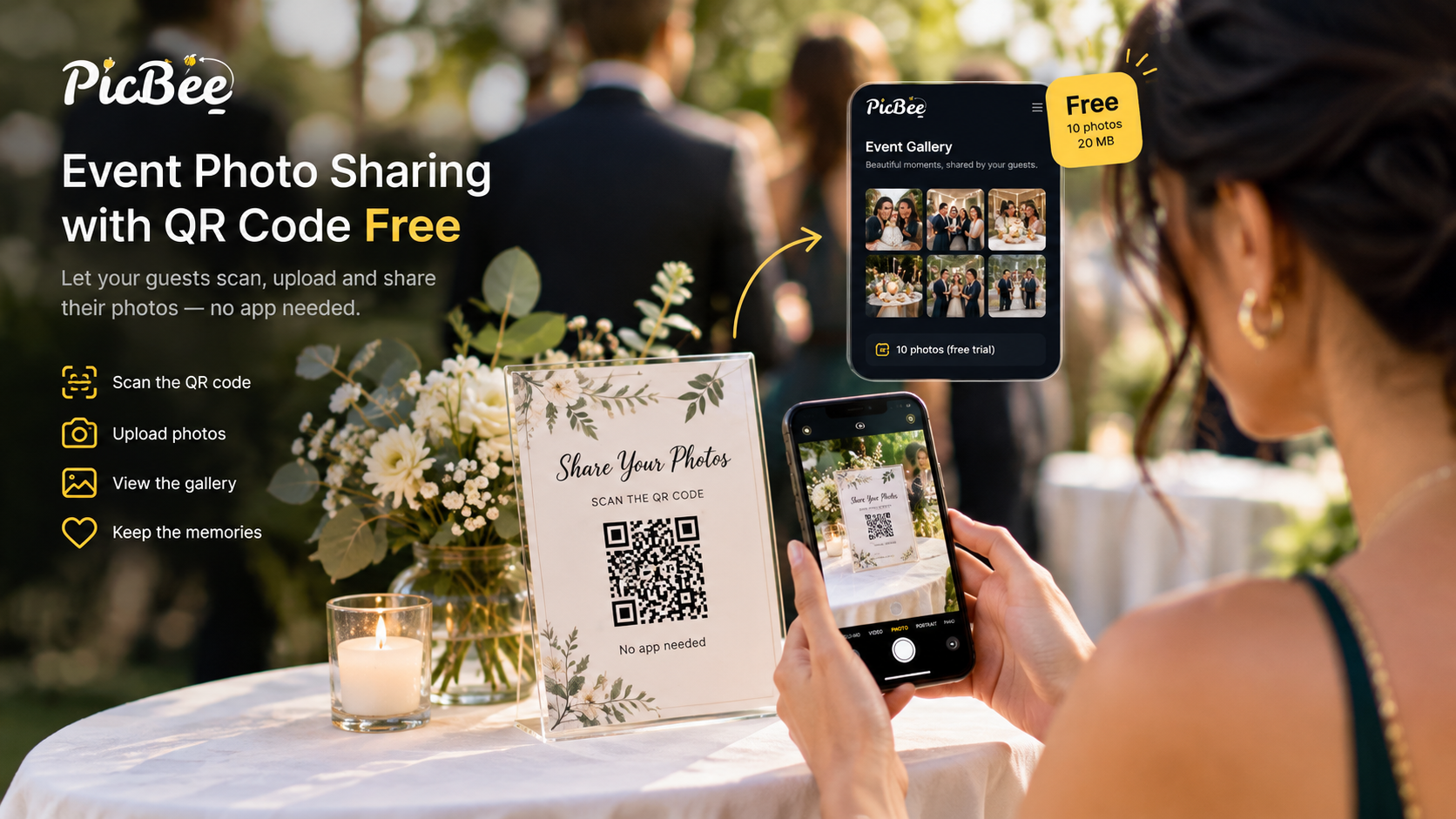
Set up the gallery before the event. On PicBee, the photographer's set and the guests' phone photos land in one gallery: guests scan a QR code at the venue and upload from the phone browser with no app (how QR code photo sharing works), and you add your selects after the edit. Both cameras, one gallery. Send a few selects the same night as a preview, then the full set later in the same link.
For the setup itself, read how to organize and set up a client photo gallery. The photographer guide to PicBee galleries shows the delivery flow, and PicBee photographer plans are built for photographers who deliver events every month.
Frequently asked questions
Q: What equipment do you need for a small event?
A: For a small event, one full-frame body, a 24-70mm f/2.8, a flash with a diffuser, and spare batteries and cards will cover it. Bring a backup body anyway, even a borrowed or rented one. A small event still only happens once.
Q: What equipment do professional event photographers use?
A: Professional event photographers use two bodies with dual card slots, a 24-70mm and a 70-200mm f/2.8, a fast prime, two flashes with triggers, and a same-night backup routine. What sets a professional kit apart is the redundancy, more than the camera.
Q: Do I really need dual card slots?
A: Yes, for paid events. Cards fail, and a second slot writing the same frames is the simplest protection against losing a wedding or a conference.
Q: Should I buy used event photography equipment?
A: Yes, used lenses and bodies are a sensible way to build a kit, if you buy from a seller with a return window and test everything before a paid job. Ask for the shutter count on a body, and check lenses for haze, fungus and loose parts.
Q: Prime or zoom lenses for events?
A: Both. Zooms give you speed when you cannot move, during a ceremony or a keynote. Primes give you more light and softer backgrounds for portraits and the dance floor.
Next step
The next step is to set up delivery before your next booking, not after it. A free PicBee account holds one event and 10 photos, which is enough to test the QR code and the gallery on your own phone before a paid job.